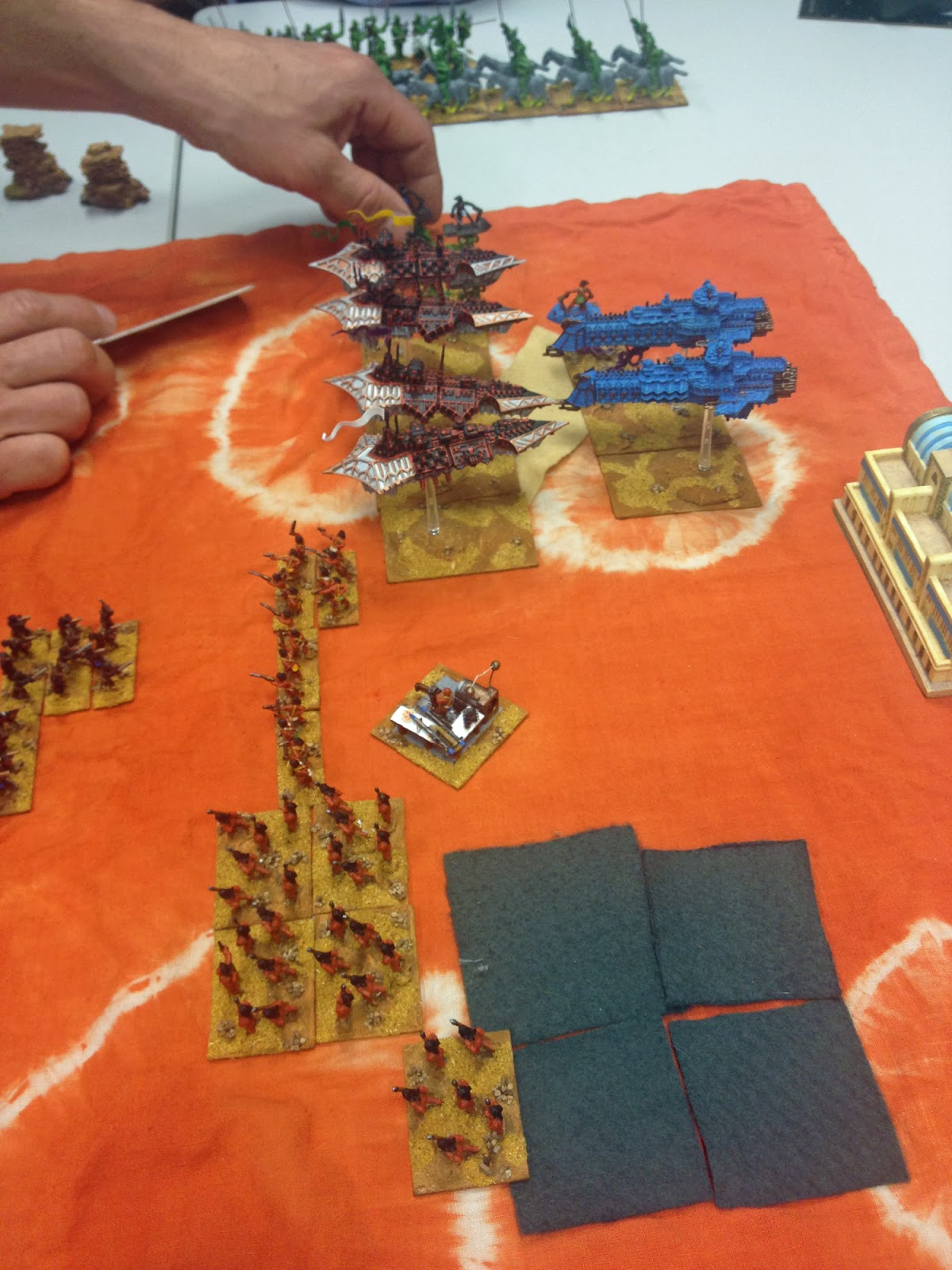
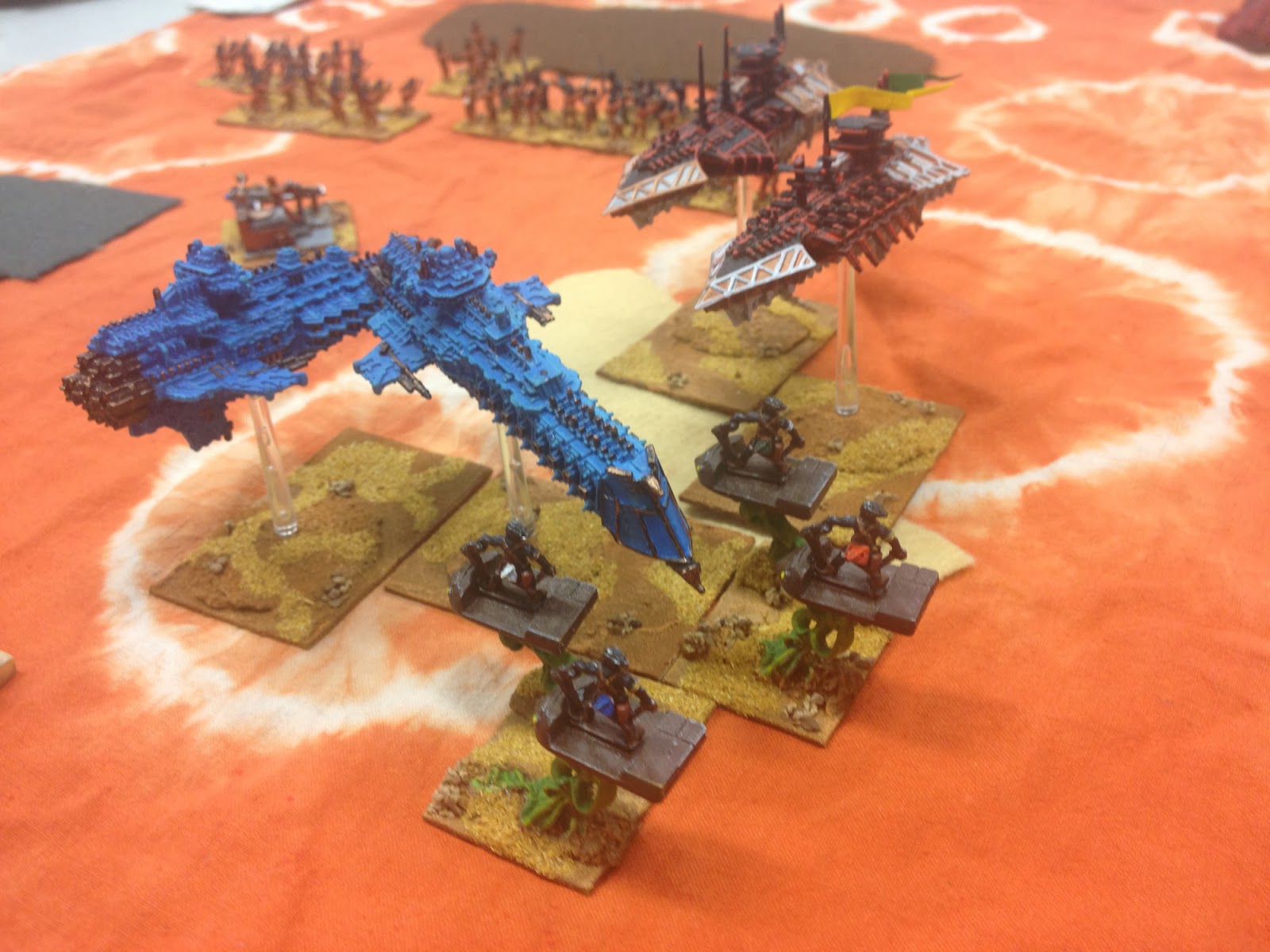
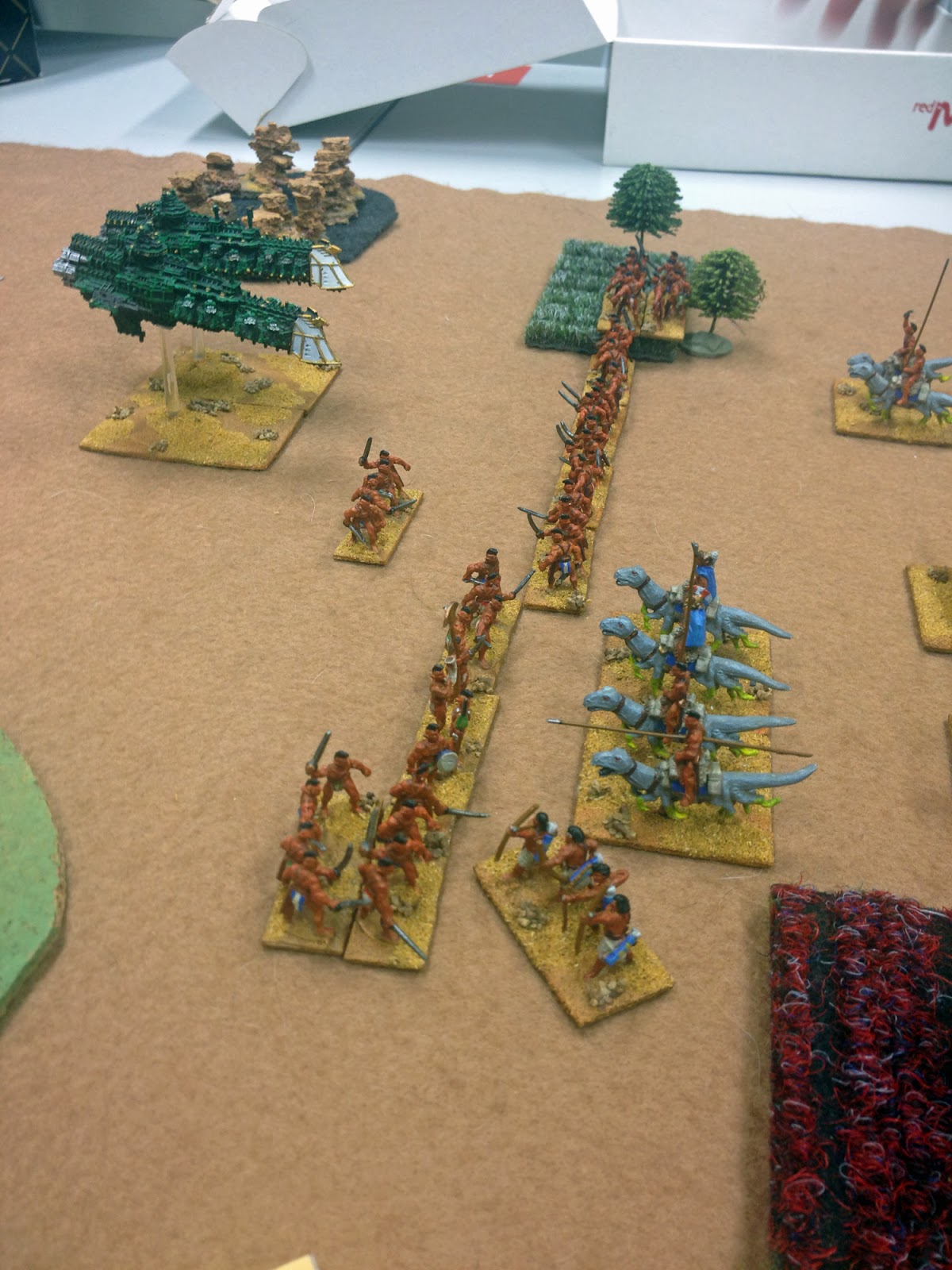
These lists cover the Narnian Chronicles of C.S.Lewis. The information has been gleaned from the seven books* that make up the chronicles as well as Brian Sibley's 'The Land of Narnia'. The latter book contains a timeline, which has been used for all the dates. In the following all dates are Narnian time. Each list is designed to give a standard 24AP army and no more than half of the points can be spent on elements costing 3AP or more.
| Jadis, Queen of Narnia | Magician General @ 4AP | 0-1 |
| Wolves, led by Maugrim | Beasts @ 2AP | 0-1 |
| Upgrade Maugrim and his Wolves to Army Commander | |
|
| Beast General @ 2AP | 0-1 |
| Minotaurs or Giant | Behemoths @ 4AP | 0-2 |
| Bats and Vultures | Flyers @ 2AP | 0-2 |
| Assorted Nasties | Up to half Warband @ 2AP |
|
| Up to half Beasts @ 2AP |
| Remainder Hordes @ 1AP | 4-20 |
This list covers the forces commanded by the White Witch Jadis, the self-styled Queen of Narnia, from her appearance out of the North to her overthrow by Aslan and the Pevensie children. Ideally she should be depicted as a tall woman with white skin, dressed in white riding in a sleigh drawn by two reindeer and driven by a dwarf. At the time of her final battle with the forces of Aslan, though, all the snow she inflicted on Narnia had melted and she in fact fought on foot. Maugrim was the wolf commander of Jadis' secret police and was slain by Peter. It is assumed that he led the army in the absence of the White Witch. In American texts he is called 'Fenris Ulf'.
Most of Jadis' army was made up of a variety of horrible creatures, few of which are described in detail. This list has been created by examining the text of 'The Lion, The Witch and Wardrobe' in conjunction with the original Pauline Baynes illustrations. Creatures mentioned are Ghouls, Boggles, Ogres, Minotaurs, Cruels, Hags, Spectres, the people of the Toadstools, bull headed men, evil tree and plant spirits, Incubuses, Wraiths, Horrors, Efreets, Sprites, Orknies, Wooses and Ettins. The illustrations show a mixture of weird and wonderful creations, some fighting with tooth and claw, others with weapons. Small dragons and a giant are certainly shown. The above list tries to give the best possible range of classifications for them. Bats and Vultures are specifically mentioned in the Flyers class, but other airborne creatures are possibilities. The small dragons depicted do not seem large enough to merit classification as anything other than Flyers or Beasts.
Narnian (1-2555)
| Aslan | Paladin @ 4AP | 0-1 |
| King and Bodyguard | Knight General @ 2AP | 1 |
| Upgrade King to Peter, Edmund or similar | Hero General @ 4AP | Any |
| Human Nobles | Knights @ 2AP | 0-2 |
| Human Archers | Shooters @ 2AP | 0-4 |
| Friendly Giants | Behemoths @ 4AP | 0-2 |
| Centaurs, Unicorns or similar | Riders @ 2AP | 0-2 |
| Dwarves with Bow | Shooters @ 2AP | 0-2 |
| Rearm Dwarves with Axes | Warband @ 2AP | Any |
| Big Cats or similar | Beasts @ 2AP | 1-3 |
| Eagles or other Birds | Flyers @ 2AP | 0-1 |
| Lesser Animals and Beings | Hordes @ 1AP | *2-10 |
| Naiads | Water Lurkers @ 1AP | 0-1 |
| Only After 1000 |
| Talking Mice | Blades @ 3AP | 0-1 |
| Only during the Civil War of 2303: |
| Downgrade King to Guerrilla Leader | Blade General @ 2AP | Any |
| Downgrade Hordes to Guerrillas | Lurkers @ 1AP | 0-1/2 |
This list covers Narnian armies from the accession of King Frank until the End of the World. The majority of Narnian armies were made up of talking beasts and various creatures of myth and legend such as unicorns, centaurs, dryads, naiads and fauns. Of the legendary creatures, the centaurs are best classed as Riders, as are the unicorns, which do not seem to be magical. The other legendary creatures are brave but do not seem to be sufficiently warlike to rate classification as anything other than Hordes. Illustrations show them fighting with slim swords, if they are armed at all. Talking beasts ranged from lions and leopards down to such things as beavers and squirrels. Those creatures with an obvious combat capability are classed as Beasts. The others are best included in the Hordes. Armies during the reign of the High King Peter and reigns of the Telmarine-descended kings also seem to have had a human contingent. These are assumed to be nobles, fighting as mounted knights, or archers.
Aslan is the archetypal Paladin. Although a driving force behind all events in Narnia he was by no means present at all battles that took place and should therefore be considered optional.
All four Pevensie children, who ruled Narnia from 1000-1015, took part in battles at some point. Peter and Edmund both commanded armies. Lucy and Susan either fought as or commanded archers so should be included in the Shooter elements.
Birds made up part of the party that rescued Edmund from the White Witch, and an eagle fought against the Calormenes, but otherwise they seem to have been used primarily as scouts.
Dwarves are described and depicted as attacking the White Witch's army with battle-axes. However, they do not seem to be the miniature Vikings beloved of other fantasy genres so are here classed as Warband. During Caspian's war with Miraz they were used predominately as scouts and seem to be skilled with the bow. Indeed, dwarven archers were especially effective against both Calormenes and talking beasts alike during the war of 2555.
Classifying Talking Mice as Blades may seem over generous, but anything less would reflect on the honour of the noble Reepicheep and his followers. Talking Mice only appeared in Narnia after the non-talking variety released Aslan from his bonds during the war against the White Witch.
Guerrilla warfare took place under Prince Caspian against the Telmarines. Hordes may only be downgraded to Lurkers if the general is downgraded to a Blade element.
Narnian shields carry a red lion rampant on a white or silver field. There is a reference however to a red lion on a green ground being used on a banner.
The minimum marked
* applies only if no Human troops are used.
Calormene (300-2555)
| Tarkaan | Rider General @ 2AP | 1 |
| Downgrade Tarkaan on foot | Blade General @ 2AP | 0-1 |
| Horsemen | Riders @ 2AP | 5-11 |
| Downgrade Horsemen as Dismounted Swordsmen | Blades @ 2AP | 0-1/2 |
| Spearmen | Spears @ 2AP | 0-6 |
| Chariots | Knights @ 2AP | 0-2 |
| Tash | God @ 4AP | 0-1 |
| Only in 2555 |
| Talking Beasts | Beasts @ 2AP | 0-1 |
| Other Narnians | Warband @ 2AP | 0-1 |
Calormen was a desert kingdom far to the South of Narnia and generally hostile to it. Horsemen appear to be armed at least with a sword and possibly with lance as well. The army that invaded Archenland was entirely mounted but dismounted to attack Anvard. The Tisroc (ruler) of Calormen measured his army in terms of numbers of spears however, suggesting that a large proportion of foot was available. Spearmen made up the second wave of Calormenes that invaded Narnia in 2555. 'The Horse and His Boy' contains a single reference to chariots being used in war.
Tash was the primary god in the Calormen pantheon. Humanoid, he had four arms, a vulture's head and moved in a cloud of grey smoke. Although there are no references to his direct intervention in Calormene affairs through the vast majority of its history, he did appear during the events that led to the End of the World, so is included in the list for completeness and variety. An image of Tash appears on the only Calormene banner illustrated.
Some Narnians allied with the Calormenes during the war of 2555.
Telmarine (1998-2303)
| King and Bodyguard | Knight General @ 2AP | 1 |
| Knights | Knights @ 2AP | 1-2 |
| Soldiers | Spears @ 2AP | 8-10 |
| Archers | Shooters @ 2AP | 0-2 |
| Before 2100: |
| Downgrade King to Chief | Warband General @ 2 AP | All |
| Downgrade Knights and Soldiers to Warriors |
| Warband @ 2AP | All |
In 460 pirates from Earth crossed over and established themselves in the land of Telmar. Some 1500 years later they invaded and conquered Narnia, subjugating the human population and driving out the non-human population. Over time the non-humans became figures of legend and their existence denied. The Telmarine's irrational fear of the Narnian forests extended from the fact that it was in these that the non-human population survived. The list covers Telmarine armies from their invasion to the overthrow of their kingdom by Prince Caspian. The initial invaders are assumed to have been barbarians, who adopted Narnian civilisation after their conquest. Their post-conquest fear of forests is reflected in the classification of their infantry as Spears. Archers are not specifically mentioned as taking part in open battle, but the Pevensies were engaged by Telmarine bowmen on their journey from Cair Paravel to Aslan's How.
Archenland (180-2555)
| King | Knight General @ 2AP | 1 |
| Nobles | Knights @ 2AP | 5-9 |
| Halberdiers | Blades @ 2AP | 2-4 |
| Archers | Shooters @ 2AP | 0-2 |
Archenland lies directly to the South of Narnia and was closely allied to it. Indeed, a Narnian army came to the rescue of Anvard when the Calormenes attacked it in 1014. Although not openly stated, it appears that Archenland was populated entirely by humans. It is therefore assumed that the army would be similar to that of Narnia, but without the mythical and talking beasts. This gives it a core force consisting of a King and his nobles supported by soldiers on foot. The only reference to infantry is soldiers with halberds, but archers cannot be ruled out given the Narnian ties.
Northern Wastes (407-2304)
| Giant King | Behemoth General @ 4AP | 1 |
| Giants | Behemoths @ 4AP | 1-2 |
| Lesser Giants | Warband @ 2AP | 2-6 |
| Wolves, Hunting Dogs or worse | Beasts @2AP | 0-2 |
| Outlaws and Bandits | Lurkers @ 1AP | 0-2 |
| Dragon | Dragon @ 4AP | 0-1 |
There are a number of references in the Chronicles to Narnian kings engaging in raids or wars against the Giants of the Northern Wastes. This list covers their forces as they can be conjectured from the sparse information available. It cover the Giants of the North from the first mention of them in the Chronicles until their defeat by Caspian X.
Although Giants are best classified as Behemoths, the rules forbid a 24AP army to have more than 3 of them. This leaves the problem of how to classify giants without using the Behemoth troop type. Classing them as Warband seems to be the best solution. It can be rationalised by showing that an examination of the text and illustrations of the chronicles show that giants vary in size, and that the smallest are a mere 8-10' in height - hardly Behemoth material.
The giants in 'The Silver Chair' used normal sized dogs for hunting and these could have been used in war as well.
The Wolves (or worse) represent the remains of the followers of the White Witch, some of whom were still being hunted down years after her defeat. The ones in this list are assumed to be those enterprising enough to ally themselves with the only major power in the Northern Wastes. These renegades can also make up the Lurker elements, although these also represent various outlaws and bandits of human origin that sometimes harassed Narnia.
Puddleglum speculated that a dragon was attacking Narnia at one point, suggesting that such things happened, although the only large dragons that appear in the Chronicles are actually enchanted humans. One is included for the sake of variety.
Underworlder (2356)
| Lady of the Green Kirtle | Magician General @ 4AP | 0-1 |
| Black Knight | Hero @ 4AP | 1 |
| Upgrade Black Knight to Army Commander | Hero General @ 4AP | 0-1 |
| Gnomes | Hordes @ 1AP | 12-20 |
| Enchanted Animals | Beasts @ 2AP | 0-2 |
This list represents the forces assembled by the Lady of the Green Kirtle in her attempt to seize control of Narnia. It is a 'fictional' list, as the invasion never took place, being thwarted by Jill, Eustace and Puddleglum. The Lady of the Green Kirtle was a powerful sorceress of unknown origin. If engaged in combat she could shape-shift into a giant poisonous serpent. The Black Knight was, in reality, Rilian, heir to the Narnian throne, but the Lady held him under an enchantment. She had planned for him to lead her army but this list allows for the possibility that she might take a more direct role in events. Thus the Black Knight is only considered a general if the Lady is not present.
Gnomes should not be depicted as the bearded, pointy-hatted miniature men of popular legend. Although humanoid they varied greatly in appearance and it is best to read the text of 'The Silver Chair' for descriptions.
A number of surface creatures found their way into the underworld, where they slept in enchanted sleep. It is assumed that the Lady would make use of the more dangerous ones in her army.